








Restoring Fair and Open Competition on Federal and Federally Assisted Construction Projects Would Save Taxpayers At Least $10 Billion Annually
The Trump administration has an incredible opportunity to rebuild America’s infrastructure better and faster with a commonsense policy change expected to save taxpayers at least $10 billion annually on federal and federally assisted construction projects procured by local, state and federal governments, according to new analysis by Associated Builders and Contractors.
By replacing inflationary Biden administration policies requiring and encouraging controversial project labor agreements on federal and federally assisted contracts with a new executive order prioritizing fair and open competition, the Trump administration can increase competition from experienced small and large contractors, reduce construction costs and avoid needless delays and labor shortages that are currently plaguing some public works projects.
Government-Mandated PLAs Are Bad Public Policy
A recent Boston Globe editorial board headline succinctly declared that “PLAs are bad policy.”
Recent Congressional testimony by ABC and other construction industry experts illuminated why the Biden administration’s pro-PLA policies are problematic.
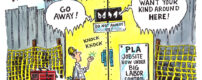
PLAs are controversial because they typically force all construction contractors on a project to recognize unions as the representatives of their employees, use union hiring halls to obtain most or all trade labor, exclusively hire apprentices from union-affiliated apprenticeship programs, follow inefficient union work rules and pay into union benefit and multiemployer pension plans.
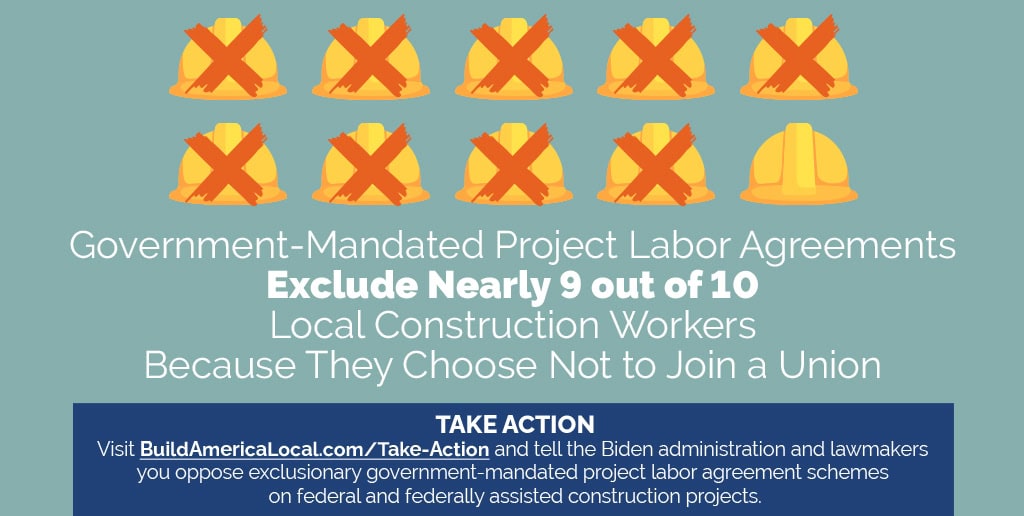
PLAs also require construction workers to pay union dues and/or join a union if they want to work on a PLA project and receive union benefits. If they do not satisfy these stipulations, the limited number of nonunion workers allowed on a PLA jobsite lose an estimated 34% of their wages and benefits to union coffers and benefits plans, making them the victims of wage theft.

Most union-signatory contractors are fans of government-mandated PLAs because it is easier to win a bonanza of taxpayer-funded construction contracts when quality nonunion competitors are discouraged from bidding on them.
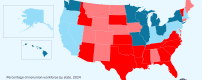
Likewise, powerful construction labor unions affiliated with the North America’s Building Trades Unions lobby their government allies for PLAs so unions are gifted a monopoly to supply workers for federal and federally assisted construction projects. It’s no wonder that NABTU sent 91% of its federal PAC dollars to Democrats in the 2022 election cycle, and is expected to match similar totals in the 2024 election cycle (once all information is reported) in an environment where union membership is at an all-time low of just 10.7% the U.S. construction workforce.
This results in more forced union dues for labor’s dark-money political coffers, resulting in a negative feedback loop of quid pro quo corruption undermining taxpayer investments in America’s infrastructure and denying jobs to local nonunion workers and their experienced contractor employers.
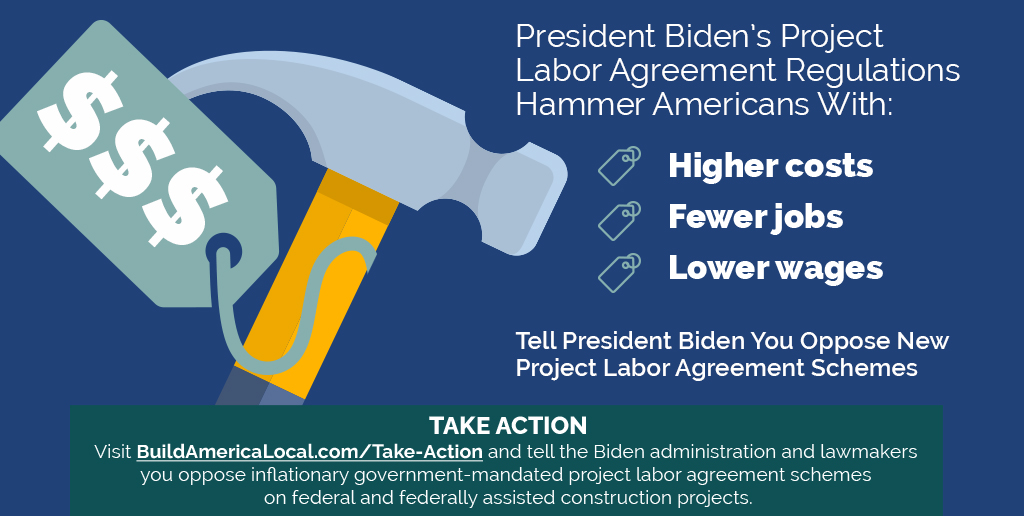
The Biden-Harris White House, which touted itself as the most pro-union administration in history, unsurprisingly enacted Executive Order 14063 through a Federal Acquisition Regulatory Council final rule and related Dec. 18, 2023, White House Office of Management and Budget Memo requiring PLAs on all federal construction contracts of $35 million or more as of Jan. 22, 2024. The Biden administration has also strongly encouraged private, state and local governments applying for competitive federal agency grants to require PLAs on their infrastructure, clean energy and manufacturing projects in order to increase their chances of receiving federal funding.
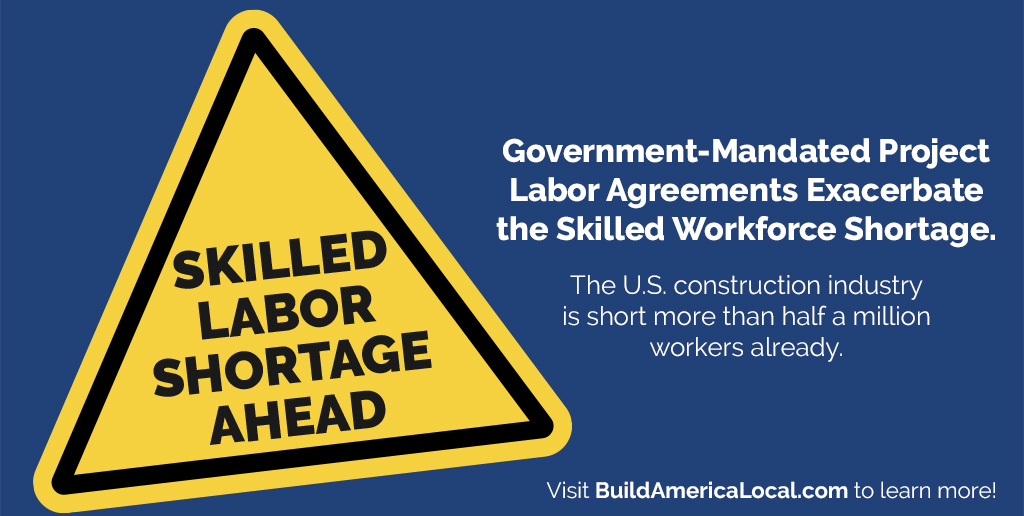
The Biden administration claims PLAs somehow ensure cost-saving and efficiency in contracting by excluding a record 89.3% of U.S. construction workers who do not belong to a union as the industry faces a shortage of more than half a million workers in 2024.
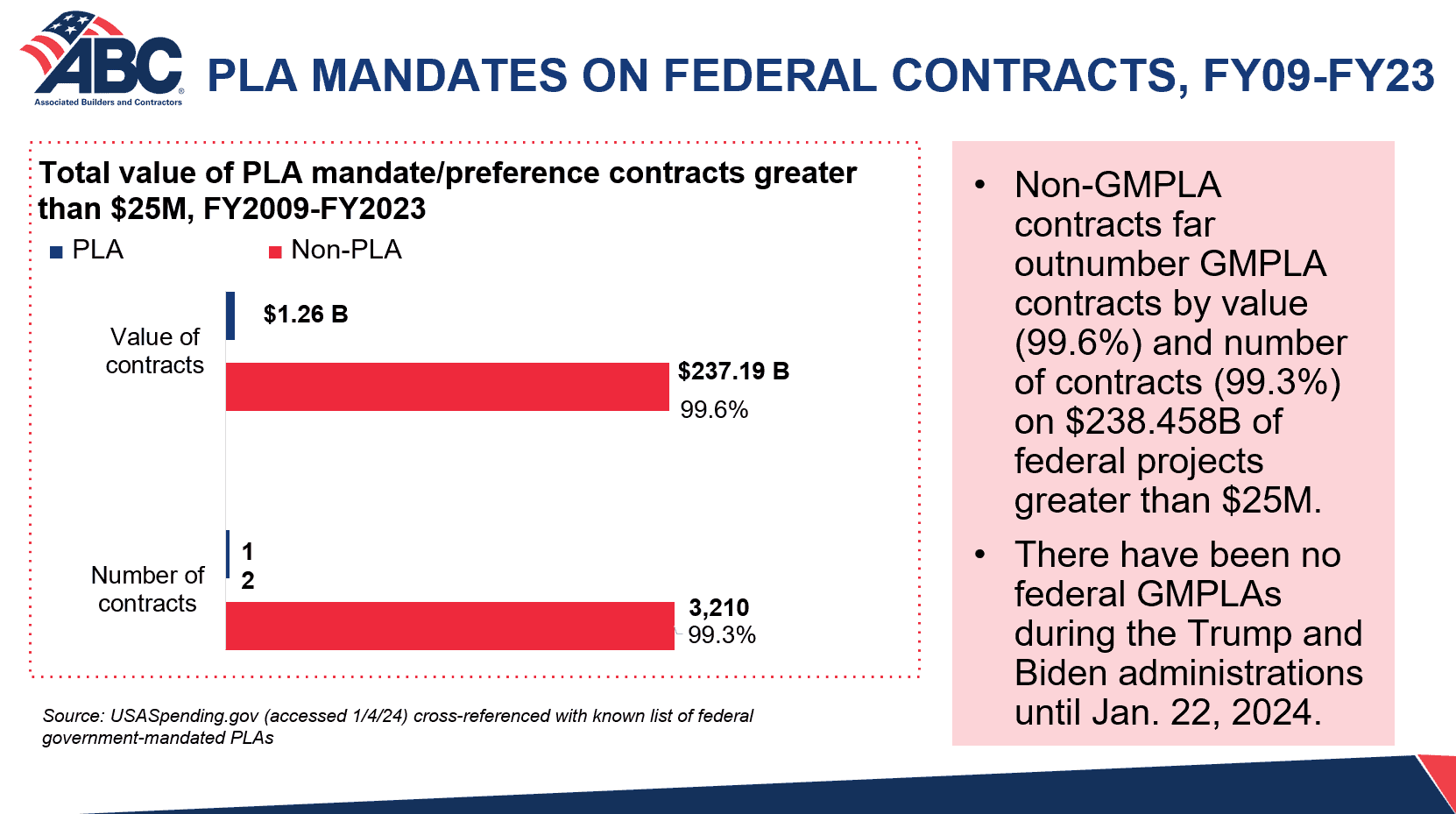
Yet critics such as Associated Builders and Contractors, a broad coalition of taxpayer watchdogs and trade associations point to evidence that 3,210 large-scale federal construction projects free from government-mandated PLAs valued at $237 billion were built without incident between 2009 and 2023.
In addition, $147 billion worth of federal construction projects and hundreds of billions of federally assisted construction projects were built without incident from 2001 to 2008 when PLA mandates were prohibited on federal and federally assisted construction projects through a previous executive order.
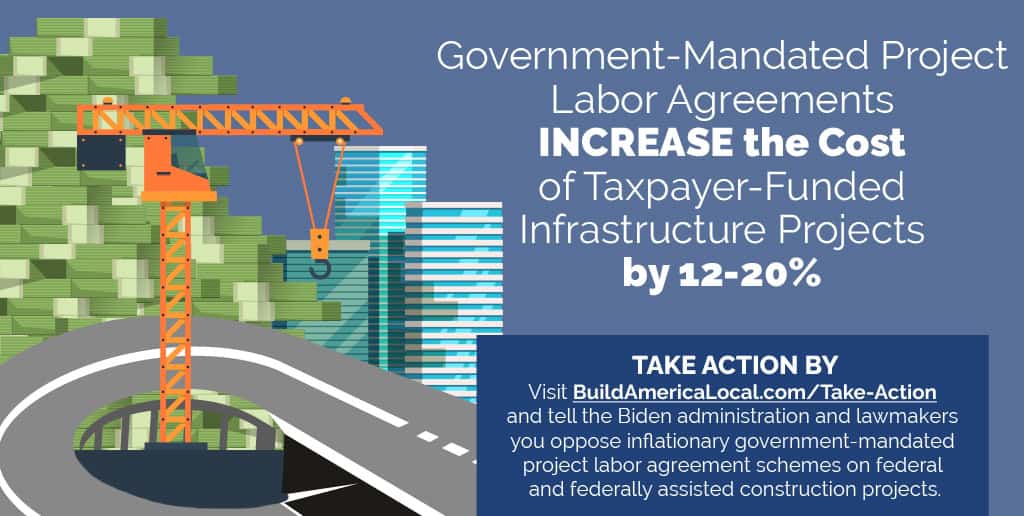
Likewise, PLA opponents can cite multiple studies of hundreds of taxpayer-funded affordable housing and school construction projects, which found that government PLA mandates increase the cost of construction by 12% to 20% compared to similar non-PLA projects already subjected to union-friendly prevailing wage regulations. The latest study of affordable housing projects funded by Los Angeles Proposition HHH found that PLA projects were 21% more expensive and suffered delays 27% longer than non-PLA projects.
These realities may explain why California Gov. Gavin Newsom and other prominent Democratic lawmakers in Maine and the District of Columbia have recently opposed PLA mandates on taxpayer-funded projects.

It is also why ABC and its Florida First Coast chapter filed suit in federal court on March 28, 2024, to block Biden’s PLA final rule on construction contracts procured by federal agencies, asserting it is beyond the scope of executive authority and violates the Constitution, the First Amendment and the Administrative Procedure Act, among others. The litigation is ongoing.
Fair and Open Competition Policies A Win-Win for Taxpayers and the Construction Industry
A coalition of two dozen construction industry trade associations and organizations sent a Jan. 9, 2025, letter to Trump officials requesting that the Trump White House replace the Biden pro-PLA EO and related policies with a Fair and Open Competition EO similar to President George W. Bush’s court-affirmed EOs 13202 and 13208 signed in 2001. These orders restricted government-mandated PLAs on federal and federally assisted construction projects, creating opportunities for all Americans in the construction industry to rebuild their communities––until their repeal by the Obama administration in early 2009.
According to ABC analysis, a Trump Fair and Open Competition EO will deliver an estimated $1.92 billion to $3.2 billion in savings on direct federal contracts and $4.094 billion to $6.823 billion in savings on federally assisted state and local government projects annually.
In total, taxpayers can expect an estimated $6 billion to $10 billion in savings on federal and federally assisted projects annually, should the Trump administration implement a Fair and Open Competition EO.
Of note, the annual federal contract savings estimate is projected based on usaspending.gov federal contract award data that found 180 federal construction contracts of $35 million or more—valued at $16 billion dollars—were awarded in FY23. Because the Biden EO will apply to all future federal contracts of $35 million or more—absent a Trump EO—a similar amount of federal construction projects and spending will be subject to PLA mandates in 2025 and beyond. Of note, complete 2024 data was not yet available at the date of this analysis.
ABC estimates cost savings by eliminating PLA mandates and preferences on federally assisted projects based on ABC analysis of census.gov state and local government construction project spending in 2023 and current state and local government PLA policies.
A total of 25 states restrict government-mandated PLAs on state, state-assisted and local construction projects to some degree, providing protection against Biden administration policies pushing PLA mandates on federally assisted projects. In contrast, a dozen blue states promote inflationary PLAs on public works projects, boxing out the majority of quality contractors and local workers from competing to build projects receiving federal assistance.

Multiple academic studies of public works projects already subject to prevailing wage laws have found government-mandated PLAs add 12% to 20% to the total cost of a construction project compared to similar non-PLA public works projects subject to prevailing wage laws. Estimated 2023 federal and federally assisted construction spending totals subject to PLA mandates were multiplied by 12% to 20% to demonstrate future cost savings for this analysis.
Trump EO Would Generate Additional Savings on Private Construction Projects Receiving Federal Funding and Tax Incentives
A President Trump EO would also deliver tens of billions of dollars in cost savings on private clean energy and manufacturing projects for taxpayers, ratepayers, consumers and developers by eliminating costly pro-PLA language included in Biden administration regulations not approved by Congress pertaining to federal grants, loan guarantees and tax incentives.
Unlike public works projects, the total amount of potential cost savings on private construction projects free from PLAs is difficult to estimate with accuracy given current data limitations. For example, Inflation Reduction Act federal tax incentives for clean energy projects are not claimed by private developers until after the project is put in service. Because these are new projects, it is unclear what the total eligible construction costs will be and if the owner was coerced by Biden administration policy tied to tax incentives, loan guarantees and grants enticing developers to mandate a PLA on the project in question.
In general, 30% of a project’s construction costs are eligible to be offset by IRA federal tax incentives if developers force their contractors to meet IRA prevailing wage and apprenticeship requirements. However, there are additional tax incentives available that make accurate estimations using this assumption difficult.
In short, it is unclear how much construction activity the IRA tax incentives will encourage at this time.
Because we don’t have a crystal ball revealing the exact amount of future construction spending and how many of these projects will be subject to PLA mandates, these are the best available estimates given current data.
Construction Activity Resulting From Recent Federal Infrastructure Funding Bills Slower Than Expected
The Biden administration has touted infrastructure spending resulting from the $1.2 trillion Infrastructure Investment and Jobs Act of 2021, $350 billion in state and local construction investments from the American Rescue Plan Act of 2021, nearly $400 billion in federal grants, loan guarantees and tax incentives for private clean energy projects through the Inflation Reduction Act of 2022, $52.7 billion for domestic microchip manufacturing through the CHIPS and Science Act of 2022 and other legislation funding public and private construction projects.
However, recent surveys of ABC member contractors suggest that the pace of awarded construction contracts, projects breaking ground and project completion has been slow and underwhelming.
A Nov. 19, 2024, Construction Dive article reported that just $568 billion, or 47%, of Infrastructure Investment and Jobs Act funds have been announced, per a Nov. 15, 2024, White House fact sheet.
The Biden administration tracks public and private investments in infrastructure as a result of recently passed legislation at whitehouse.gov/invest. Most of the projects celebrated by the Biden administration have been announced, meaning the government has announced funding for these projects that is funded in part by federal investments or spurred by federal investments. This is different than awarded contracts. Awarded contracts is when contractors (and the construction industry supply chain) win a contract to start construction services and receive subsequent economic benefits from performing the construction work.
ABC analysis of data from the Biden administration’s Invest.gov website downloaded on Dec. 30, 2024, found the announcement of $43.691 billion in direct funding and $11.7 billion in loans for CHIPS and Science Act projects, and $142.989 billion in direct funding and $8.12 billion in loans for IRA projects.
It is not clear how many construction contracts have been awarded to contractors (and ground broken and projects completed) as a result of these announced awards of federal funding and loans, but it is likely a much smaller total than announced funding awards.
Many of these projects have been delayed by increased borrowing costs, construction materials cost inflation, supply chain disruptions, skilled labor shortages, a lack of contractor capacity, lengthy environmental permitting red tape and anti-competitive labor requirements.
For example, a Federal Highway Administration spokesperson told factcheck.org that just 36 federally funded charging stations with a total of 226 charging ports have been built across 13 states following the 2021 infrastructure bill’s investment of $7.5 billion in EV charging stations. The law provided $5 billion for EV charging under the National Electric Vehicle Infrastructure Formula Program and $2.5 billion under the Charging and Fueling Infrastructure grant program in order to meet the Biden administration’s goal of building 500,000 EV charging stations by 2030. The federal government distributes NEVI funds to transportation departments in all 50 states, Puerto Rico and the District of Columbia; in addition, a wide range of agencies, including municipal governments, tribal governments and universities, can access CFI funds. However, many of the funding grants were riddled with new pro-union policies that reduced contractor competition and delayed the construction of EV charging stations, as predicted by ABC. In the face of such poor performance, Biden administration spin-doctors created additional confusion by moving the goalposts and taking credit for publicly available EV charging stations built since 2021 that did not received federal money.
In addition, an Oct. 14, 2024, op-ed in The Wall Street Journal by Republican Federal Communications Commission Chairman Brendan Carr documented Vice President Kamala Harris’ failure to connect not one home or business to rural broadband infrastructure after she agreed in 2021 to lead the administration’s $42 billion plan for expanding high-speed internet to millions of Americans. According to Carr, the Biden-Harris administration recently confirmed that BEAD construction projects won’t begin until 2025 at the earliest, and in many cases not until 2026. The BEAD program funding NOFOs contain policies pushing PLAs.
Trump Merit-Based Contracting Policies Can Accelerate Contract Awards at The Best Price For Taxpayers
Potential commonsense Trump administration policy changes that drive down inflation and high interest borrowing rates mothballing public and private development, speed up construction project permitting and increase domestic energy production would be extremely beneficial for taxpayers and construction industry stakeholders. These measures would help bring down the cost of construction goods––which are almost 39% more than at the start of the pandemic.
Likewise, a Fair and Open Competition EO would complement these reforms by eliminating a discriminatory Biden policy contributing to the construction industry’s skilled labor shortage, government-sanctioned forced union membership and/or wage theft from nonunion workers’ paychecks and a lack of competition from experienced large and small, minority, veteran-owned general contractors and subcontractors on federal and federally assisted projects.
President Trump’s delivery of $10 billion in cost savings on public works projects and billions of dollars in savings on private projects would translate into more infrastructure improvements, more opportunities for builders and at least 35,500 more jobs in construction on an annual basis.
Looking ahead, President-elect Trump has a tremendous opportunity to rebuild America’s infrastructure with commonsense policies that benefit all of America’s construction industry and deliver savings to taxpayers without sacrificing quality or safety. Fair and open competition is the best strategy to restore the greatness of America’s economy with benefits for all Americans.