









Maine Governor Mills Surprises Union Lobby with Veto of Project Labor Agreement Legislation
In a surprising turn of events bucking traditional Democratic Party alliances, on June 26, Maine Gov. Janet Mills (D) vetoed legislation she introduced related to future offshore wind projects after the bill was amended by the legislature to include anti-competitive and inflationary project labor agreement requirements favored by union lobbyists.
Gov. Mills’ June 26 veto letter to the legislature expressed concerns that such PLA requirements are likely to “raise costs” “that would have to be shouldered by Maine people during a time of inflation-driven price increases in the construction industry and already sky-high energy costs driven by our over-reliance on fossil fuels.”
The veto letter incorporates a June 21 letter to Sens. Curry, Mark Lawrence of York County, Stacy Brenner, chair of legislature’s Environment and Natural Resources Committee, and Senate President Troy Jackson, each of whom are Democrats, with thoughtful analysis of the negative impact of government-mandated project labor agreements:
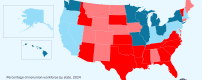
“Most Maine workers in the construction industry – in fact, more than 90 percent – are not unionized, which means that adding a PLA requirement creates a chilling effect for these companies and their workers to participate in, and potentially, build this project. As a result this could stifle competition, which could cut out thousands of workers and employee-owned businesses, and could end up favoring out-of-state unions in the region, over Maine-based companies and workers – and I do not believe any of us want to see out-of-state workers being bussed up to coastal Maine to build our offshore wind port while Maine workers are sidelined, sitting at home.
As this industry begins to grow, we must maximize, not sideline or limit, benefits to Maine workers and companies and minimize costs to Maine taxpayers and ratepayers. It is imperative that investment in offshore wind facilities foster opportunities for Maine’s workforce and construction companies to compete on a level playing field for this work. As highlighted in the state’s Roadmap, utilizing the benefits of offshore wind for Maine requires an ‘all-hands-on-deck’ approach and a significant opportunity to create long-term family supporting jobs in the State, that includes unions as well as small businesses and existing employee-owned and other Maine companies.
Therefore, I cannot sign LD 1847 into law.”

The decision puts Governor Mills at odds with the Biden administration, which has repeatedly pledged that new clean-energy jobs will be well-paying union jobs.
The Biden administration has issued a controversial proposed rule requiring PLAs on federal agency construction contracts of $35 million or more and is coercing private and government stakeholders to mandate PLAs via $271 billion in federal agency competitive grant programs for infrastructure, clean energy and manufacturing construction projects.
Look for the Biden administration to put pressure on Gov. Mills to broker a deal benefiting unions in the future.
“As the Biden administration continues its all-out assault on nonunion construction workers and merit shop contractors, it is refreshing to see Gov. Mills’ leadership rejecting political dogma for the betterment of local construction workers, businesses and taxpayers by ensuring these clean energy projects will be procured via fair and open competition,” said Ben Brubeck, ABC vice president of regulatory, labor and state affairs. “Gov. Mills joins a bipartisan movement of state lawmakers that have rejected inflationary and discriminatory PLA policies supported by the Biden administration, and welcome all of America’s construction workforce, whether union or nonunion, to compete to rebuild their communities.”
In 2011, Maine Republican Gov. Paul LePage, signed L.D. 1257 into law, which prohibited government-mandated PLAs on state construction projects before it was sunset in October 2015 via a legislative maneuver.
A total of 25 states have laws restricting government-mandated PLAs on state, state-assisted and local construction projects, to some degree. ABC analysis found that such state laws prevented inflationary government-mandated PLAs on more than $1 trillion worth of construction capital outlay through the end of 2022.
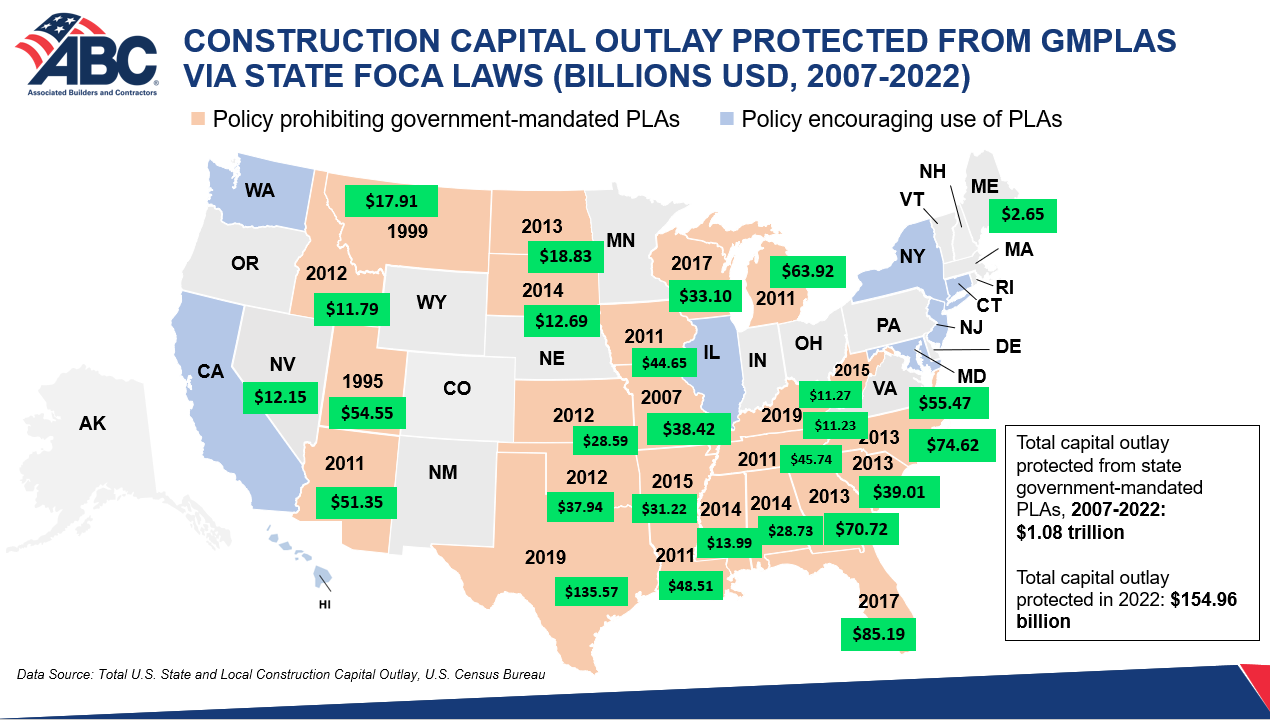
In 2011, Maine Republican Gov. Paul LePage, signed L.D. 1257 into law, which prohibited government-mandated PLAs on state construction projects before it was sunset in October 2015 via a legislative compromise when the bill was signed into law. Minnesota and Virginia are the only other states to repeal their anti-PLA mandate policies, which occurred following full Democratic Party control of their legislature and/or governor’s office.
LD 1847, originally introduced by Sen. Chip Curry (D-Waldo) on the governor’s behalf, passed the Maine Legislature earlier this month. The governor’s bill initially proposed that any future deep-water ports that state planners are considering for the construction of the floating turbines would have to undergo a review of its potential impact on the “scenic character” on the surroundings, using a new visual impact standard.
Prior to passing her bill, however, the Maine Senate amended it to include provisions laid out in another bill by Curry, LD 1818, that would require the use of project labor agreements in any ports planned for all on-site turbine construction.
Mills is also threatening to veto another bill because PLAs were included. L.D. 1895 would set a target for Maine to reach 3,000 megawatts of offshore wind power by 2040.
About Government-Mandated Project Labor Agreements
Union lobbyists contend PLAs—master collective bargaining agreements with multiple construction unions governing a construction project—are a tool to prevent union strikes, ensure the use of local labor and deliver projects on time and on budget. But the truth is these goals will and have been achieved without PLAs. In addition, many PLA projects have failed to reduce costs, improve local job creation and prevent jobsite strikes, accidents and delays.
Typical government-mandated PLAs contain anti-competitive and costly terms and conditions that favor union contractors and workers and hurt the local area’s construction industry and taxpayers.
While all contractors, including contractors not already signatory to a union agreement are technically free to bid on construction contracts subject to a government-mandated PLA, the terms of a PLA require contractors to replace most or all of their existing employees with union members dispatched from union hiring halls, use apprentices exclusively from union training programs, follow inefficient union work rules and pay into union benefits plans even if firms have their own existing benefits plans. Additionally, nonunion tradespeople are forced to accept unwanted union representation, pay union dues and then forfeit benefits earned during the life of the project unless they join a union and become vested in union benefits programs, resulting in a loss of total compensation by an estimated 34%.
Qualified local businesses employing more than 9 out of 10 of Maine’s construction professionals can’t win a contract and work on a jobsite unless they agree to these anti-competitive and costly pro-union terms. It is no surprise such red tape and discrimination discourages competition from experienced merit shop firms and well-trained nonunion craft professionals in the region.
Fewer bidders, coupled with costly and restrictive provisions in PLAs, needlessly increase construction costs. For example, academic research by various government and private institutions have determined affordable housing and school projects subject to PLA mandates are 12% to 20% more expensive than projects not subject to PLA mandates.
Maine Gov. Mills is right to reject bad public policy known for increasing costs, chilling competition, placing barriers to new jobs for qualified Maine residents and rewarding well-connected special interests with government contracts.